Time for a Global Reckoning of the COVID Era
History has a way of forcing humanity to revisit its greatest mistakes. What once seemed unquestionable eventually becomes the subject of scrutiny, public inquiry, and sometimes profound regret. The COVID-19 era is becoming one of those defining moments.

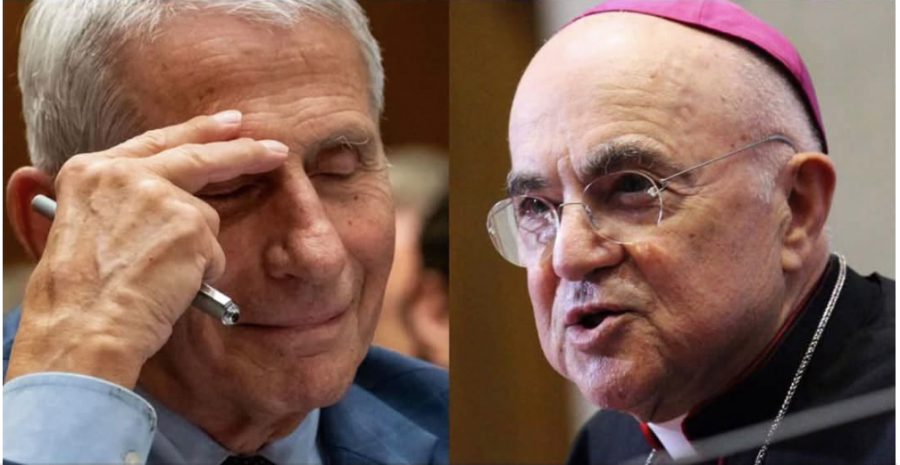
Recent allegations by former Vatican Archbishop Carlo Maria Viganò have revived a question many believed had already been settled: How did governments, public health authorities, pharmaceutical companies, media organizations, technology platforms, and even religious institutions converge so completely around a single narrative while treating scientific dissent as something to be silenced rather than debated?
Whether one agrees with all of Archbishop Viganò’s conclusions is almost beside the point. His criticism reminds us that institutions entrusted with moral authority should never become instruments of political or commercial agendas. Their role is to encourage ethical reflection, intellectual honesty, and the pursuit of truth—even when that truth is uncomfortable.
For Raelians, this conversation is not new.
From the earliest days of the pandemic, Rael urged people not to receive the novel mRNA COVID-19 vaccines. He described the technology as experimental and repeatedly warned against allowing fear, political pressure, media influence, or institutional authority to override independent thought.
More profoundly, Rael framed the issue as one of respect for the Elohim’s creation. To submit unquestioningly to a rapidly developed genetic technology out of fear or social pressure, he argued, was to demonstrate a lack of trust in the extraordinary biological masterpiece created by the Elohim. Respecting the human body means far more than preserving physical health—it means honoring the intelligence that designed it and refusing to surrender one’s bodily autonomy without informed reflection.
The pandemic exposed a disturbing reality: how easily fear eclipses reason, how quickly scientific questioning gives way to conformity, and how readily millions surrender one of their most fundamental rights—the sovereignty of their own bodies.
Physicians and researchers who questioned prevailing policies were often marginalized rather than engaged. Social media platforms removed content. Governments invoked sweeping emergency powers. Citizens who simply asked questions were frequently portrayed as threats to public health rather than participants in legitimate scientific discourse.
This should concern everyone, regardless of their position on COVID-19 vaccines. The moment questioning becomes unacceptable, science ceases to function as science and begins to resemble ideology.
The extraordinary alignment among governments, pharmaceutical companies, major media organizations, technology platforms, and even religious institutions deserves careful examination. Institutions expected to provide independent moral guidance—including the Vatican—too often appeared to reinforce prevailing policies instead of encouraging open ethical and scientific debate. Whether history ultimately judges those decisions as justified or misguided, they deserve transparent examination rather than collective amnesia.
As research continues to emerge on the long-term effects of COVID-19, the effectiveness of public health interventions, and the societal consequences of lockdowns, mandates, censorship, and emergency powers, one thing has become increasingly clear: humanity deserves a comprehensive, transparent, and independent assessment of what happened.
Rael has long taught that humanity’s future depends not only on scientific progress but also on emotional intelligence, critical thinking, and the courage to question authority whenever authority discourages independent thought. The Elohim did not create humanity to obey blindly. They created us to think, to question, and to evolve.
Perhaps the greatest lesson of the COVID era is that science and freedom are inseparable. Science without freedom becomes dogma. Freedom without science becomes ignorance. Above all, science without questioning ceases to be science. Humanity needs both.
The time has come for a global reckoning—not to divide humanity further, but to ensure that future generations inherit institutions worthy of their trust. Because truth should never fear questions. And science should never fear debate.
Felix Clairvoyant

Elohimleak #8: The 60 richest people on Earth are now secretly building an underground complex ...
Rael, Spiritual leader of the International Raelian Movement, has just released a new ' Elohim leak', a statement received from the Elohim, the advanced scientists who created life on Earth and who have been taken for gods for millennia.
Rael launches ‘One Minute for Peace Campaign’
In a recent address, Rael, spiritual leader of the Raelian Movement, proposed to have as many people as possible give just one minute of their time to meditate for peace.

Rael calls for ‘planetized‘ arms industry under world government control
According to Stockholm International Peace Research Institute (SIPRI), more than $400 billion has been spent in weapons and military services worldwide in 2010.


